
Corporate Finance: The 10 Laws of Finance
Build your foundation in value, risk, time, and cash flow. Work through interactive lessons, examples, and practice questions.
The learning library · Free to explore
Learn the idea. Work the numbers. Put it into practice. Explore finance, real estate, entrepreneurship, accounting, and AI through courses, useful tools, and conversations with people doing the work.

Devon Coombs, CPA, MBAAssistant Teaching Professor of Finance and Faculty Director of Real Estate Finance, Santa Clara University
Free learning resources, with no account or email required. Independently published by Devon Coombs; these are not SCU degree or credit-bearing courses.
Choose a starting path: four practical activities, a worked example, and a checklist you can return to. Or browse the full library below.
The full collection
Read an article, watch a lesson, or work through an example. Choose a format to see its complete collection.
280 resources
A preview of each collection. Every resource is available below.Build your foundation in value, risk, time, and cash flow. Work through interactive lessons, examples, and practice questions.
Move from property cash flow to valuation, mortgages, underwriting, and investment decisions.
Understand startup cash needs, valuation, venture capital, dilution, and the economics of a deal.
Practice real finance workflows, evaluate evidence, and keep professional judgment and controls in the process.
A 10-point executive presentation checklist from SCU finance faculty Devon Coombs. Use before-and-after examples, a free slide outline and a decision brief builder.
Build a real estate investment committee presentation: sources and uses, NOI, debt coverage, downside and exit. Includes a worked example and free outline.
Explain startup pitch financials: market size, unit economics, cash runway, funding needs and dilution. Free examples and a financial slide outline from SCU faculty.
Build a should-cost estimate from materials, labor, overhead and supplier margin. Try a worked example and download a free Excel template.
Understand quality of earnings, EBITDA adjustments, net debt and the working-capital peg. Follow a worked purchase-price bridge and a diligence checklist.
See how a GP/LP waterfall allocates profit. Compare an 8% preferred return with and without a GP catch-up in a clear, interactive example.
Compare gross, modified gross, triple net and absolute net commercial leases. See who pays operating costs and calculate total occupancy cost.
Understand reassessment, supplemental property tax bills and the costs a mortgage payment leaves out. Includes a California buyer example and official sources.
Follow a $12,000 SaaS contract through bookings, invoices, revenue, cash, receivables and deferred revenue. Includes an interactive monthly timeline.
Compare SOX financial-reporting controls with SOC 2 service-organization assurance, including SOC 1, Type 1 and Type 2 and practical next steps.
Use a practical technical accounting memo template: facts, issue, authoritative guidance, analysis, alternatives, conclusion, entries and review evidence.
Build a weekly cash forecast from receipts and payments. Download a free Excel template, test a late collection and use AI for grounded commentary.
Follow a post-money SAFE through a simplified cap table and a later priced round. Understand valuation caps, option pools and dilution with a worked example.
Translate a $100,000 Bay Area salary into hourly pay and a realistic monthly budget. Compare household costs, benefits, saving and career tradeoffs.
CPA vs. CFA vs. MBA: compare careers, requirements and tradeoffs. Use the career selector, check California’s 2027 CPA changes, and find SCU resources.

The story behind The 10 Laws of Finance: Devon’s path from financial hardship to accounting, finance, and teaching.

Build an AI workflow around a defined task, supply useful context, and verify the result before relying on it.

An introduction to the role of context, goals, professional judgment, and cost in using AI at work.

Explore AI tokens, usage pricing, and the revenue-accounting questions they create for finance teams.

A short look behind the scenes of the book and its supporting finance videos.

Connect property financial statements, net operating income (NOI), and capitalization rates in a real estate finance lecture.

Work through discount rates, net present value, and internal rate of return when comparing investment decisions.

Understand diversification through correlation, portfolio rebalancing, and the efficient frontier.

A GAAPSavvy conversation about Claude, Excel workflows, fluctuation analysis, and AI support for finance teams.

A finance masterclass covering forecasting, time value of money, bond valuation, and business valuation.

Watch an AI-assisted application-building workflow using an ASC 606 revenue recognition example.

Use Devon’s experience with financial loss to explore concentration risk and the case for diversification.

Discuss how automation changes work, creates new tasks, and reshapes the skills finance professionals need.

A personal investment story introduces risk analysis and the relationship between risk and expected reward.

An introduction to forecasting: using what you know today to think through future financial outcomes.

Explore rent-versus-buy reasoning through valuation, cash flow, and the assumptions behind a housing decision.

Learn the role of forecasting in financial planning and analysis (FP&A).
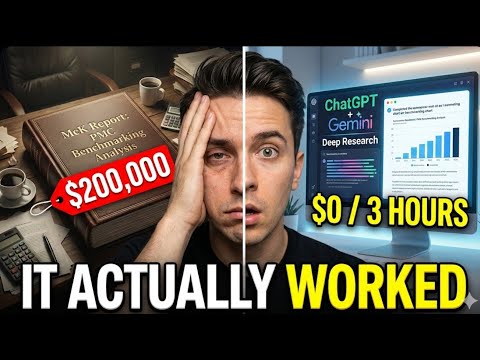
Watch a live AI-assisted research workflow and consider how to review a business report’s analysis and evidence.

Connect visible spending, wealth, and financial statement analysis in the second law of finance.

A conversation about leading finance teams through changes in AI tools, workflows, and responsibilities.

Review the accounting equation and learn to connect the balance sheet, income statement, and cash flow statement.

Start with an honest financial picture: the opening lesson of The 10 Laws of Finance.

Discuss selecting and using AI models with attention to professional judgment and authenticity.
An archived Finance 170 course introduction connecting finance to personal and professional decisions.
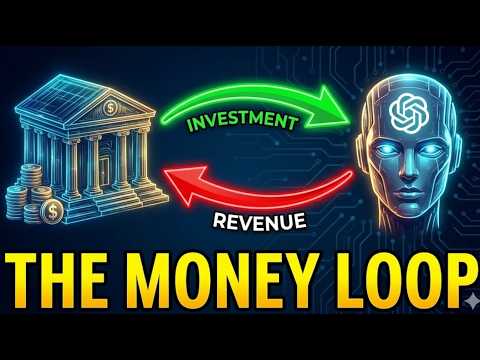
A discussion of AI economics, large technology companies, and questions to ask about reported financial performance.
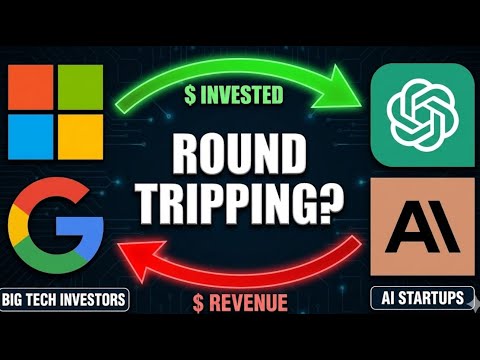
A GAAPSavvy discussion of AI investment relationships and the accounting questions raised by circular revenue flows.

Explore ASC 606 revenue recognition for consumption and usage-based pricing in SaaS and cloud businesses.
Discuss principal-versus-agent analysis, marketplace transaction fees, and SaaS revenue accounting under ASC 606.

Build a foundation in present value, future value, compounding, and discounting.

Compare price-to-earnings (P/E) and price/earnings-to-growth (PEG) ratios and the context each measure needs.

Use financial ratios to interpret company performance and connect the numbers to business questions.

An introduction to the ASC 606 five-step revenue recognition model.

A short introduction to retirement withdrawal assumptions and the perpetuity formula. The assumptions drive the result.

Personal reflections on money, career choices, and using your twenties intentionally.

Review the relationship between investment risk and expected return.

Practice portfolio-management questions covering diversification, risk, and investment strategy.

Connect weighted average cost of capital (WACC), CAPM, and NPV in a capital-budgeting decision.

Learn how the efficient frontier compares portfolios by expected return and risk.

Review portfolio-management fundamentals and the role of diversification.

A compact overview of ten finance principles and their application to personal and business decisions.

Work through twenty financial valuation problems for course, interview, and exam practice.

Price annual and semiannual coupon bonds using a spreadsheet, calculator, and algebra.

An introduction to three approaches to valuation and the questions each helps answer.

Practice pricing a bond with calculator inputs and the underlying mathematics.

A short framework for approaching a valuation problem before working the numbers.

Calculate a stock value using the Gordon growth model and its constant-growth assumptions.

Use AI to draft additional practice questions, then check the questions and solutions against your course material.

Practice ten time-value-of-money examples in a short worked-problem video.

A short compounding example showing how investment growth depends on time and the assumed rate of return.

Use the Rule of 72 to estimate how long an investment takes to double at an assumed return.

Work through a future-value example using a stated 7% annual return assumption.

Explore an investment-income calculation and the relationship between capital, withdrawals, and return assumptions.

Prepare with ten solved present-value and future-value problems.

Apply financial ratios to a business case and interpret what the results mean.

Calculate bond present value using annuity tables and Excel.

AI is changing how companies think about revenue, pricing, and cost in real time. Devon and Angela work through the accounting problems behind rapid AI feature launches, consumption-based pricing, and why traditional revenue recognition rules are getting harder to apply.

A lecture on the time value of money, from the five variables to the retirement math they drive. Devon uses his own decision to sell $200,000 of Google stock to pay off a 3% mortgage, forfeiting the upside when the stock later tripled, to show what opportunity cost really costs.

Alula went from public accounting to founding Edge Consulting Labs, where he works on blockchain in business operations and AI-driven tools. He and Devon, college friends, cover the evolution and misconceptions of cryptocurrency, Bitcoin's scarcity model, and Edge Flow, a blockchain-based inventory management tool.

Jotham grew up in the Philippines with a chip on his shoulder, broke through as a CPA, then built and led a technology company. A health crisis forced him to re-evaluate everything, and he talks about using a custom ChatGPT to manage his recovery and about trading relentless accomplishment for what matters.

Ryan Volk and Aaron Einhorn left traditional accounting careers to launch Principal Consulting Group, an advisory firm that puts culture and trust ahead of transactions. They explain hiring slow and firing fast, expanding from technical accounting into data analytics without losing quality, and the leadership lessons that came with growth.

Melissa has navigated billion-dollar transformations in tech, from shrink-wrapped software to global cloud infrastructure and AI, and has run a marathon on a floating sheet of ice with polar bear guards. She connects endurance sport to leading global teams and shares advice for CFOs on risk and understanding a business beyond the numbers.

Kelsie Neibel hit severe burnout more than once in a high-performing sales career that ran through Deloitte and Goldman Sachs. She explains the science-backed methods she used to rewire her thinking, the T-chart method for replacing a scarcity mindset, and how she changed her relationship with money.

Shane Clark left 75-hour weeks at a large accounting firm to join his father's tax practice in Los Angeles and build a family-centered business. He and Devon cover tax strategies for high earners, the benefits of owning a business, and the practical steps that stop lifestyle creep.

Claire went from Deloitte to BlackLine to a startup before founding Kipsy, a software company built for accountants. She talks about leading with a customer-first mindset, finding the right co-founder, the role of mentors, and the challenges she pushed through to get the company where it is.

Nickolaus Violin launched a flexible workspace business and nearly lost it to real estate deals gone wrong, difficult landlords, and delayed permits. He talks candidly about trust and betrayal in partnerships, why a handshake is never enough, and where optimism turns into delusion for a founder.

Ray Sang, a former Revenue Director at Elastic and Deal Controller at Google, is building Inkwise, an AI writing platform for professionals in law, accounting, and finance. He explains why most AI-generated memos and contracts are flawed, what professional-grade drafting with AI should look like, and drafts a real ASC 606 memo live.

Sara Fung was denied stress leave and gaslit by her workplace before she walked away from a toxic healthcare system. She built a business from scratch, started The Gritty Nurse podcast, and reached number one on Canada's bestseller lists while raising kids and recovering from burnout.

Blake Oliver, CPA, founder of Earmark and host of the most listened-to accounting podcast, joins Devon to talk about the crisis of trust in the profession: secret timesheets, burnout built into the system, CPE that no longer teaches, and revenue recognition games. They also talk about what it would take to fix it.

Nina and Harton left careers at Google and Big 4 firms to build TABot, an AI co-pilot for technical accountants. They explain how fine-tuned models save hours in audit and memo preparation, how they dealt with hallucinations in accounting work, and what it takes to run a lean startup in a regulated space.

Most promotions come with a lie: that you are ready. Executive coach Kent Frazier explains why top performers fail upward into roles they were never trained for, the invisible shift from contributor to leader, and the 90-day playbook every new leader should follow.

Ravi Prakash arrived in the United States with no money and no family, lost his eyesight, and went on to lead digital transformation programs at Salesforce and write Safar, a book on resilience and self-mastery. He talks about leading when the odds are stacked against you and why joy has to come before money.

Vladimir Baranov coaches technical founders, including YC-backed teams, through the leadership problems that stall companies. He explains why brilliant engineers cap their own growth, how AI is misused as a crutch instead of a coach, and what breaks when a team reaches 10, 50, or 100 people.

Larry Jacobson spent 15 years as a technical hiring manager at companies like Snap and Amazon before becoming an executive coach. He and Devon go through job search strategy for experienced professionals: the resume, the LinkedIn profile, networking that works, and how to handle interview questions.

Nadia leads data analytics at Google and came through a period of mental health struggles during COVID-19 by finding her purpose. She shares the practices that got her there: listening to her own voice, reflection and journaling, and bringing her full self to work.

Eric Nehrlich hit rock bottom after years of 100-hour weeks at Google and rebuilt his career around his values. He talks about the moment he realized he had a choice, the discipline of saying no, and how experimenting with different paths led him to coaching.

Shannon McCullar commanded in high-stakes environments before becoming an executive coach. He argues that leadership is influence, trust, and empowerment rather than rank or control, and explains why leaders who rescue their teams set them up to fail.

Dr. Laura Aziz has led more than 3,000 coaching sessions with executives who hit a plateau. She explains why competence alone stops working at a certain level, the blind spots that hold professionals back, and how to communicate with real executive presence.

Chirag Panjikar spent 20 years leading digital transformation and supply chain modernization, including teams of more than 250 people. His conclusion after all of it is that people and trust matter more than any technology, and he explains how to build that trust when a team does not believe in its leadership.

Limor Bergman coaches women in tech and engineering through self-doubt and into senior leadership. She walks through her own move from software engineering to executive coaching, the golden handcuffs that kept her in place for years, and why waiting for permission is the most common career mistake she sees.
Devon joins Angela Liu and Lynn Gargano to discuss forecasting, accounting workflows, and the controls needed around AI.
An Earmark conversation with Blake Oliver about technical accounting expertise, career choices, ASC 606, and the changing role of AI.
Devon talks with Jotham Ty about finding accounting, learning from adversity, and taking a broader view of a finance career.
Devon’s guest conversation on The Shane Ray Show about his path into accounting and finance.
A 2019 On Becoming conversation with Devon about teaching and helping others.
The story and teaching resources behind the book, with its official launch trailer. An August 2026 publication update.
An archived August 2026 announcement about the book’s origins and the financial education it sets out to offer.
A practical walkthrough of preparing a financial reporting package with AI, including source material, assumptions, and professional review.
A framework for planning AI work, supplying context, setting governance boundaries, and reviewing the result.
Explore the founder as a startup’s first asset and connect founder characteristics to entrepreneurial finance decisions.
A practitioner framework for matching advice to founder context, built on the Founder Archetype Matrix and three diagnostic questions.
A 36-question interactive diagnostic that maps you across five dimensions and generates a tailored archetype with specific guidance. Takes 10 minutes.
An April 2026 snapshot of AI platforms and their implications for finance workflows. Read as a dated industry perspective.
A practitioner's guide to Claude Cowork and Skill Packs. How AI-powered workflows are transforming financial close, reconciliation, and reporting.
Anthropic shipped a feature this week that sounds incremental but isn't: Claude can now generate interactive visualizations directly inside the chat window.
I asked 150 finance students what they wanted from AI, and they turned all of it down. What they asked for instead, and what I built from it.
Every finance leader I talk to asks the same question first: "What AI tools should we buy?" That's the wrong question and it's costing you months of progress.
Circular deals, trillion-dollar commitments, and depreciation assumptions. How the money behind the AI buildout is structured, and what investors should watch.
Reflections on 2025. Gratitude for the community, lessons learned, and what's ahead for AI, finance, and building a life with purpose.
The three largest areas of technical accounting risk in the AI economy. Revenue recognition, capitalization, and impairment. And what CFOs need to know.
A candid look at where you really are in your career, finances, and life. And why radical honesty about your starting point is the first step to growth.
A practical framework for CFOs, CAOs, and operators building AI-enabled organizations.
Why buying AI tools without redesigning your organization is a recipe for failure. A framework for the structural changes AI actually demands.
Unpacking the EU's new regulation and its real impact on remaining performance obligations (RPO). What CFOs and revenue accountants need to know.
An update on what I've been building since leaving Google. Consulting, teaching, AI strategy work, and resources for finance leaders navigating change.
How an immigrant CEO turned his "chip on his shoulder" into a career. And why he had to let it go to build a life worth living.
Five years ago, I turned down the chance to help co-found a consulting firm. Not because I didn't believe in the people. I did. But I wasn't ready.
What polar bear guards, AI readiness, and culture-fit calls have in common. The work everyone is avoiding is often the work worth doing.
I've seen it happen more times than I can count. A high-growth company signs a massive, multi-year distribution deal. The press release goes out.
In the relentless pursuit of career goals, it's easy to fall into the trap of constantly doing more, striving harder, and pushing through burnout.
Why a Deals Desk is the missing high-leverage function in most finance orgs. And how to build one that drives revenue, enables velocity, and protects margin.
Why AI won't replace the human judgment layer in finance, and why your org chart is about to flip. Real case studies from enterprise AI deployments.
Most high earners don't have a tax problem. They have a lifestyle design problem they didn't know they signed up for.
How Claire Tsukuda built a SaaS company accountants actually love. Without the title, degree, or VC backing. A masterclass in scrappy entrepreneurship.
After five years at Google Cloud, 12 hard-earned rules on leadership, ambition, deal-making, and building a career with purpose in Big Tech.
Why AI is reshaping how we create, communicate, and lead in finance, but still can't handle basic math. What that means for the future of your team.
What nurses taught a CPA about sustainable leadership, burnout prevention, and building careers that last. Lessons every finance leader needs to hear.
A conversation with Blake Oliver on why accounting is more creative than people think, and how the profession is being reshaped by AI and technology.
How AI is transforming accounting workflows and what finance professionals need to do now to stay ahead of automation before it reshapes their roles.
A CPA's guide to spotting the precise moment time outperforms money. And why smart companies should care about the human cost of compensation.
Why financial freedom might be 5 years away, not 30. How to build leverage, extend your runway, and create optionality without millions in the bank.
You're not broke. You're bleeding. You just haven't slowed down long enough to see it.
Authenticity compounds and misalignment drains. Zeal, alignment, and energy as a sharper test of success than optimization and achievement.
My leadership training did not come from books. It came from living in my car. What sustained pressure teaches about leading with intention.
Brutally honest career advice from hundreds of conversations with executives, coaches, and Big Tech professionals on making bold moves at any stage.
Outwardly successful and inwardly drained? How to design the life first and the career second, before burnout makes the choice for you.
Many high performers feel trapped in golden handcuffs, a career that pays well but no longer excites them. How to break free and own your growth.
A four-step method for a focused job search, written after going from sleeping in my car to leading finance initiatives at Google Cloud.
Why I walked away from a six-figure partnership with equity and bonuses attached, and how to judge when betting on yourself is worth the risk.
After Meta let go of over 4,000 employees, including high performers, how to use LinkedIn to actually help, and what misalignment costs.
An excerpt from The 10 Laws of Finance, out now on Amazon. In 2010 I was $10,000 in debt and homeless, and why that turned out to be a foundation rather than an ending.
Let's be honest. The Monday after the Super Bowl is practically a national holiday of regret.
Homeless at 21 after my first business collapsed. The career mistakes that cost me years, and what I would tell anyone starting over today.
Career moves and money habits feel rational. Often they trace back to subconscious imprints. How to spot yours and rewire the pattern behind them.
Why blindly applying to hundreds of jobs is a losing strategy. And the targeted approach that actually works in tech, finance, and beyond.
How to align your personality, faults, and core values into a personal operating system for resilience, better decisions, and intentional growth.
A layered model for building resilience on purpose, so productivity metrics stop crowding out the parts of life that actually drive fulfillment.
At 18 I leased a North Hollywood recording studio and lost two years of savings. What that first failed business taught me about running one.
Calculates effective gross income for a rental property by walking gross potential rent down through vacancy, loss to lease, credit loss, and concessions, then adding other income. Inputs include unit count, market rent, vacancy and credit loss percentages, loss to lease, concessions, and other income, with presets for stabilized, lease-up, and stressed properties.
Calculates net operating income, the operating expense ratio, and the implied cap rate for an income property. Inputs are effective gross income, a line-item operating expense budget, and a purchase price or value.
Calculates expense-stop or base-year expense recoveries and the net effective rent for a single office or retail lease. Inputs include rentable area, starting rent and annual escalation, lease term, free rent, tenant improvement allowance, and Year 1 operating expenses with a growth rate.
Estimates the value of an income property by projecting annual NOI, capitalizing a terminal value at an exit cap rate, and discounting both back to present value. Inputs are Year 1 NOI, an NOI growth rate, the hold period, exit cap rate, selling costs, and a discount rate.
Sizes the maximum commercial mortgage under LTV, DSCR, and debt yield tests and shows which constraint binds. Inputs are property value, annual NOI, interest rate, amortization period, and the maximum LTV, minimum DSCR, and minimum debt yield thresholds.
Distributes total sale proceeds through a simplified GP/LP equity waterfall of return of capital, then preferred return, then the promote split, with the pref paid on both LP and GP capital. Inputs are the LP contribution, GP co-investment, preferred return rate, residual split, and total distributable proceeds.
Calculates cash flow before and after debt service by netting capital costs, reserves, and loan payments out of NOI, then relates the result to equity invested and an implied value at a cap rate. Inputs include annual NOI, capital project and reserve line items, principal and interest payments, equity invested, and a cap rate.
Builds a full acquisition model with a driver-based NOI forecast, financing, and sale, then solves for unlevered and levered IRR, equity multiple, cash-on-cash, and debt coverage. Inputs span purchase price, closing costs, loan terms, Year 1 NOI and growth, reserves, hold period, and the terminal cap rate.
Calculates the compound annual growth rate between a beginning and an ending value, alongside total growth and the naive linear average for comparison. Inputs are the beginning value, the ending value, and the number of annual periods.
Adjusts a comparable sale price in the standard appraisal sequence, transactional adjustments first (financing, then market conditions) and property adjustments after (location, physical, nonrealty), with percentage adjustments compounding. Inputs are the comparable sale price, each adjustment amount or percentage, and the months since the sale.
Values a property by direct capitalization and builds a cap rate two more ways, from a band-of-investment blend of debt and equity and from the growth decomposition R = Y − g. Inputs are stabilized NOI, a market cap rate, the LTV, mortgage constant, and equity dividend rate for the band, and a required return and long-term NOI growth rate.
Calculates the monthly payment, mortgage constant, Year 1 interest and principal split, balloon balance at maturity, and the yield ladder from note rate to lender yield to effective borrowing cost, held to term or prepaid early. Inputs are the loan amount, note rate, amortization, term, origination points, third-party closing costs, and an optional prepayment year.
Values a property from unlevered cash flows, growing NOI and escalating reserves each year and adding a reversion at an exit cap rate net of selling costs, all discounted at the property rate. Inputs include Year 1 NOI and growth, Year 1 reserves and escalation, the discount rate, hold period, exit cap rate, and selling costs.
Screens an asking price with four quick checks, price per unit, price per square foot, gross rent multiplier, and implied cap rate, each flagged against a market benchmark. Inputs are the asking price, unit count, building area, gross annual rent, NOI, and the comparable market figures for each screen.
Builds one-variable and two-variable direct-capitalization sensitivity tables showing how value moves as the cap rate and NOI change. Inputs are the base NOI, the base cap rate, and the step sizes for each variable.
Evaluates a single property acquisition on unlevered and levered NPV and IRR, equity multiple, cash-on-cash, and MIRR. Inputs cover purchase price, Year 1 NOI and growth, reserves, hold period, exit cap rate, selling costs, loan terms, and the required returns.
Calculates annual depreciation and tax savings, the tax due at sale split into depreciation recapture and capital gain, and the resulting after-tax levered IRR and NPV on the chapter’s worked deal. The interactive inputs are the depreciable basis, recovery period, ordinary, recapture, and capital gain tax rates, up-front loan costs, and the after-tax required return, while the operating deal itself stays fixed.
Calculates a CAPM required return from the risk-free rate, beta, and market risk premium, plus a probability-weighted expected NPV across bull, base, and bear scenarios. Inputs are the three CAPM parameters and a probability and NPV for each scenario.
Compares owning corporate real estate against leasing by treating ownership as an incremental investment, rent avoided plus the depreciation shield each year and after-tax sale proceeds at exit, solved to an IRR against the firm’s real estate hurdle. Inputs include annual rent, the tax rate, purchase cost, depreciable basis, recovery period, appreciation, hold period, and required return.
Compares a sale-leaseback against a mortgage refinancing side by side, calculating the implied financing rate, the tax on the embedded gain, and net after-tax proceeds from each route. Inputs are the sale price, annual leaseback rent, cost basis, depreciable basis and years held, the corporate tax rate, and the refinance LTV and mortgage rate.
Calculates yield-on-cost, the development spread over the market cap rate, and the value created by building rather than buying. Inputs are land, hard, soft, and financing costs, the stabilized NOI, the market cap rate, and a required spread hurdle.
Sizes the permanent take-out loan to the smallest of the LTV, DSCR, and debt yield tests on the stabilized property, then nets it against the construction loan to show cash returned or the gap to fill. Inputs are stabilized NOI and value, the three sizing constraints, a mortgage constant, and the construction loan balance.
Places an investment in the four-quadrant map of real estate capital, public or private crossed with equity or debt, showing representative vehicles, the benchmark index, and the control-versus-liquidity tradeoff for that quadrant. The inputs are the two selections, equity versus debt and public versus private.
Solves the DiPasquale-Wheaton four-quadrant model to a long-run equilibrium rent, asset price, construction rate, and stock, and shows the rent overshoot that follows a demand shock while supply catches up. Inputs are the demand index, cap rate, depreciation rate, and replacement cost.
Tests a company against the core REIT qualification rules, the 75 percent asset test, the 75 and 95 percent income tests, the 90 percent distribution requirement, the 100-shareholder minimum, and the 5/50 ownership rule. Inputs are the company’s asset and income percentages, distribution rate, shareholder count, and concentrated ownership share.
Runs sale proceeds through a return-of-capital, preferred-return, and promote waterfall, separating the GP’s co-investor return from its sponsor promote and optionally layering in a sponsor fee stack. Inputs include total equity, the GP co-investment, preferred return, promote rate, hold period, distributable proceeds, and the fee assumptions.
Calculates a GP catch-up from the preferred return already paid and a clawback that trues up deal-by-deal promote against whole-fund results. Inputs are the pref paid and the GP’s target promote share on one side, and per-deal profits and losses, the promote rate, and promote already collected on the other.
Calculates two-asset portfolio volatility with correlation, the diversification benefit versus the weighted average, and the Sharpe ratio, plus an equal-weight ladder showing risk decline as assets are added. Inputs are the weight in each asset, the two volatilities, the correlation, the portfolio return, and the risk-free rate.
Probability-weights bear, base, and bull IRRs and equity multiples into an expected return, compared against a required hurdle. Inputs are a probability, IRR, and equity multiple for each scenario plus the hurdle rate.
Isolates how exit cap-rate expansion hits property value and, magnified by leverage, the equity beneath it, holding NOI and debt fixed. Inputs are the NOI, the going-in and exit cap rates, and the loan-to-value ratio.
Calculates the gain needed to recover a given loss of capital and the equity cushion that survives a value decline at a given leverage level. The inputs are the loss percentage and the loan-to-value ratio.
Calculates the yield on a renovation program as the incremental stabilized income divided by the renovation spend that produced it. Inputs are the number of units renovated, the cost per unit, and the monthly rent premium achieved.
Converts a quantifiable due-diligence finding into a recommended purchase-price credit, the cost to cure grossed up by a contingency for overrun risk. Inputs are the estimated cost to cure and the contingency percentage.
Probability-weights base, upside, and stress IRRs into an expected IRR and contrasts it with the simple three-way average. Inputs are the levered IRR and probability weight for each of the three scenarios.
Shades a five-year levered-IRR grid across annual rent growth and exit cap rate by whether each cell clears a chosen return floor, using modeled outputs from the course’s worked deal. The input is the return floor, since the underlying IRR grid is fixed to the chapter example.
Calculates customer acquisition cost, customer lifetime value, the LTV:CAC ratio, and the CAC payback period for a subscription business. Inputs are monthly revenue per customer, gross margin, monthly churn, sales and marketing spend, and new customers per month.
Projects whether a startup reaches profitability before its cash runs out, the default alive or default dead question, along with current and worst-case runway. Inputs are cash on hand, monthly gross burn, current monthly revenue, and the monthly revenue growth rate.
Sizes a market bottom-up into TAM, SAM, and SOM dollar figures from unit counts and contract value rather than top-down percentages. Inputs are total units in the market, serviceable units, reachable units near-term, expected penetration, and annual contract value.
Calculates how a price change, net of any volume response, flows through to operating profit, holding variable cost per customer constant. Inputs are the price, variable cost per customer, fixed costs, customer count, and the percentage changes in price and volume.
Calculates free cash flow to the firm and free cash flow to equity from the same operating inputs, showing where the two measures diverge. Inputs are EBIT, the tax rate, depreciation and amortization, capital expenditures, the change in net working capital, interest expense, and net borrowing.
Calculates the price-to-earnings ratio and the growth-adjusted PEG ratio for a profitable company. Inputs are the market price per share, earnings per share, and the annual EPS growth rate.
Splits an exit between preferred and common shareholders under non-participating, participating, and capped participating preference structures, including the point where the preferred converts to common. Inputs are the preferred investment, liquidation preference multiple, as-converted ownership, exit value, and the participation cap.
Calculates the compound annual growth rate implied by a beginning value, a target ending value, and a number of years, and contrasts the small early-year gains with the larger late-year gains the same rate produces. Inputs are the beginning value, the ending value, and the number of years.
Projects monthly recurring revenue forward month by month, with ending MRR equal to beginning MRR plus new MRR minus churned MRR. Inputs are the price per unit, new units added per month, the monthly churn rate, and the number of months to project.
Calculates how much a startup needs to raise, the cumulative net burn to the next milestone plus a minimum cash floor minus cash on hand. Inputs are monthly net burn, months to the milestone, the minimum cash floor, and current cash on hand.
Works backward from a revenue target to the qualified opportunities and total pipeline value required at a given conversion rate. Inputs are the new revenue target, average deal size, and pipeline conversion rate.
Calculates a CAPM cost of equity, with an optional size premium, and blends it with the after-tax cost of debt into a weighted average cost of capital. Inputs are the risk-free rate, beta, equity risk premium, size premium, capital-structure weights, pre-tax cost of debt, and tax rate.
Calculates a Gordon growth terminal value, its present value, and the resulting enterprise value alongside the explicit-period cash flows. Inputs are the final-year free cash flow, the WACC, the perpetuity growth rate, and the length of the explicit forecast period.
Calculates IRR and modified IRR side by side, with MIRR compounding interim cash flows forward at an explicit reinvestment rate instead of at the IRR itself. Inputs are the initial investment, the interim annual cash flow, the exit cash flow, the holding period, and the reinvestment rate.
Works backward from a projected exit to post-money and pre-money valuations and the ownership a venture investor needs today, including an adjustment for expected future dilution. Inputs are the exit value, target annual return, years to exit, the investment amount, and expected dilution.
Calculates a startup’s expected value as the probability-weighted sum of failure, downside, base, and upside outcomes, with failure explicitly included at its own value. Inputs are a value and a probability for each of the four scenarios.
Calculates the ownership a post-money SAFE fixes at signing, the investment divided by the post-money valuation cap, and shows how additional SAFEs on the same cap dilute the founders rather than earlier SAFE holders. Inputs are the SAFE investment, the post-money valuation cap, and other SAFE money raised on the same cap.
Calculates founder, investor, and option-pool ownership after a priced round under both a pre-money pool, which founders alone absorb, and a post-money pool shared pro rata. Inputs are the pre-money valuation, the new investment, and the option pool percentage.
Compounds founder ownership downward across successive financing events, multiplying retained ownership by one minus each round’s dilution. Inputs are the dilution percentages for the option pool, seed SAFEs, Series A, and Series B.
Calculates how a down round resets the preferred’s conversion under full-ratchet versus broad-based weighted-average antidilution, and what each protection does to founder ownership. Inputs are the Series A share count and original price, the down-round price, founder shares, and the new shares issued.
Calculates lifetime management fees and carried interest for a venture fund, fees charged on committed capital plus carry on investment profit. Inputs are committed capital, the management fee rate, fund life, carried interest rate, and the gross return multiple.
Runs fund proceeds through the four-tier distribution waterfall, return of capital, preferred return, GP catch-up, then the carry split. Inputs are committed capital, total returned, the preferred-return hurdle, and the carried interest rate.
Calculates the fund performance multiples DPI, RVPI, and TVPI, the realized, unrealized, and total value created per dollar paid in. Inputs are paid-in capital, cash distributions to date, and the residual value still held.
Calculates the probability a venture portfolio catches at least one outlier winner, one minus the miss rate compounded across every investment. Inputs are the number of investments and the outlier rate per deal.
Calculates how leverage raises the cost of equity under Modigliani-Miller Proposition II without taxes, while the blended WACC stays at the unlevered return. Inputs are the unlevered return, the cost of debt, and the debt-to-equity ratio.
Calculates the interest tax shield created by permanent debt and the resulting levered firm value under Modigliani-Miller with corporate taxes. Inputs are the unlevered firm value, the amount of permanent debt, and the corporate tax rate.
Calculates the weighted average cost of capital by blending the cost of equity with the after-tax cost of debt at their capital-structure weights. Inputs are the equity weight, cost of equity, pre-tax cost of debt, and tax rate.
Calculates the runway extension venture debt buys, its share of the last equity round, and the total interest cost of carrying it. Inputs are the debt raised, the size of the last equity round, monthly net burn, the interest rate, and months outstanding.
Sizes a fundraising ask from months to milestone times monthly burn, then prices the dilution correctly as the raise over the post-money valuation rather than over the pre-money. Inputs are the months to the next milestone, net monthly burn, and the pre-money valuation.
Calculates an affordable-loss budget, the months of experimentation it buys, and the personal cash floor a founder keeps if the venture fails. Inputs are personal savings, the share of savings committed, monthly venture spend, and monthly side income.
Values a company by trading comparables, applying the median peer EV/Revenue multiple to target revenue and netting out debt to reach equity value. Inputs are three peer multiples, the target company’s revenue, and net debt.
Calculates how a convertible note converts under the fixed pre-money versus fixed post-money methods, and the founder ownership gap the choice of method creates. Inputs are founder shares, the pre-money valuation, round size, note principal, interest rate and years outstanding, and the conversion discount.
Calculates a venture fund’s IRR from its capital call and distribution schedule and traces the cumulative cash J-curve from trough to final distribution. Inputs are committed capital, the investment period, the gross return multiple, and the harvest period.
Calculates the future value of a starting balance plus monthly contributions with interest compounded monthly, and splits the ending balance into the dollars contributed and the growth earned on top of them. Inputs are the starting principal, the monthly contribution, the annual rate, and the number of years.
Calculates the monthly deposit generally needed to reach a savings goal by a chosen date, after crediting what current savings are projected to grow to on their own. Inputs are the goal amount, current savings, an assumed annual rate, and the years to the goal.
Calculates an emergency fund target as a chosen number of months of essential expenses, the gap between that target and the current fund, and roughly how many months closing the gap could take at a given saving pace. Inputs are monthly essential expenses, the months of coverage, the current fund balance, and the monthly amount saved toward it.
Compares the avalanche and snowball payoff orders for up to three debts, showing the months to a zero balance and the total interest paid under each. Inputs are each debt’s balance, APR, and minimum payment, plus the extra amount paid every month.
Calculates the full monthly mortgage payment, principal and interest plus property tax and homeowners insurance, commonly called PITI. Inputs are the home price, down payment percentage, interest rate, loan term, an annual property tax rate, and the annual insurance premium.
Compares the wealth each path leaves after a chosen horizon: the renter invests the down payment, closing costs, and any monthly savings at a chosen market return, while the owner builds equity net of selling costs, with property tax, insurance, maintenance, PMI, and appreciation all modeled. The result names which path is ahead, by how much, and the approximate breakeven year.
Calculates a FIRE number, the portfolio that supports a level of annual spending at a chosen withdrawal rate, and estimates the years until the current portfolio and savings pace could reach it. Inputs are annual spending, the withdrawal rate, the current portfolio, savings per year, and an assumed annual return.
Splits monthly after-tax income into the 50/30/20 guideline amounts for needs, wants, and saving, and compares each against what is actually being spent. Inputs are the monthly after-tax income and the actual amounts currently going to needs, wants, and saving.
Calculates the car price a monthly payment budget can generally support by discounting the payments at the loan rate and adding the cash down payment and any trade-in value. Inputs are the monthly budget, the loan rate, the term in months, the down payment, and the trade-in value.
Calculates the months to pay off a student loan and the total interest at the current monthly payment, then shows the time and interest an extra monthly amount could save. Inputs are the loan balance, the interest rate, the monthly payment, and the extra paid per month.
Converts an hourly wage into annual, monthly, biweekly, weekly, and daily gross pay on any schedule, plus the time-and-a-half overtime rate. Inputs are the hourly wage, hours per week, and paid weeks per year, so unpaid time off is reflected in the annual figure.
A one-month budget worksheet that plans income, fixed expenses, variable expenses, and savings side by side with actual spending. Subtotal formulas, a 50/30/20 guideline check, and over-or-under highlighting can help show where a month drifted from the plan.
A twelve-month personal cash flow statement that records cash inflows and outflows by category, laid out the way an introductory finance course frames it. Monthly subtotals, a net cash flow line, and a cumulative row can help show whether a household is building or draining cash over the year.
A net worth statement that lists liquid, invested, property, and other assets against outstanding liabilities, with the net worth line calculated for you. A quarterly tracking table with dollar and percent change columns can help show the trend rather than a single snapshot.
A planner that orders up to eight debts by interest rate for the avalanche method, from a list of balances, APRs, and minimum payments. Formulas rank each debt, direct one extra monthly payment at the top priority, and estimate months to pay off, and a notes tab compares avalanche with snowball.
A tracker that holds multiple savings goals, each with a target amount, the amount saved so far, and a planned monthly contribution. Formulas estimate the months remaining for each goal, and in-cell progress bars can help show which goals are on pace.
A month-by-month amortization schedule for any fixed-rate loan, built from the loan amount, rate, term, and an optional extra monthly payment. Formulas fill in each payment’s interest, principal, and remaining balance, along with months to pay off, total interest, and the interest saved by paying extra.
A year-by-year projection of an investment balance from a starting amount, a monthly contribution, and an assumed annual return. Formulas fill in each year’s contributions, growth, and ending balance, and a summary splits the ending balance into money put in and growth earned on top.
Plan an ERP or systems integration with decision gates, workstreams, a partner scorecard, and a cost calculator.
Assess your team’s readiness for AI across five dimensions, then identify the capabilities to build next.
Learn how language models, context, agents, and skills work. Try an interactive reconciliation exercise.
Explore an original housing affordability study with transparent assumptions, source data, and downloadable results.
Connect classroom skills to professional habits, career preparation, and the expectations of the workplace.
Start with a question. Get a plain-language answer, a worked example, and the right tool for the next step.
Compare career paths, Bay Area pay, credentials, SCU clubs, and the lifestyle your income could support.
Explore Devon’s research and methods for finance, AI adoption, accounting controls, and decision-making.
A research-backed method for putting AI to work in accounting while preserving professional judgment.
Connect AI workflows to evidence, review, and internal-control responsibilities.
Explore the book’s resource index, practical tools, and discussion material.
Bring a finance discussion to a classroom, community group, or book club.
Look up an unfamiliar term, then follow it into an example or related lesson.
Monthly payments from $100k to $5M at rates from 5% to 8%.
The home price a salary generally supports under the 28% guideline.
What $12 to $200 an hour comes to per year, month, and paycheck.
What $30,000 to $1,000,000 a year works out to per hour.
What $1,000 to $5,000,000 grows to at 4% to 10% returns.
NPV measures dollars of value created; IRR reports an annualized percentage return. When rankings disagree, NPV generally orders deals by value added.
IRR assumes interim cash flows reinvest at the IRR itself, which can overstate returns. MIRR applies an explicit reinvestment rate. When to rely on each.
Cap rate is an unlevered pricing yield on property value; cash-on-cash is a levered yield on equity after debt service. How to apply each metric correctly.
LTV caps a loan against property value; DSCR caps it against income coverage of debt service. Lenders fund the smaller result, and DSCR often binds first.
DSCR divides NOI by the actual debt service; debt yield ignores loan terms entirely. Which lender sizing test binds, when it binds, and why deals fail one.
Discount firm cash flows at WACC, equity cash flows at the cost of equity. How to match the rate to the cash flow stream and what a mismatch does to value.
A convertible note accrues interest and matures as debt; a post-money SAFE sets a minimum ownership stake at signing. How to choose and who absorbs dilution.
Pre-money sets the price per share; post-money sets investor ownership. How to quote each number, compute dilution correctly, and read option pool terms.
LTV measures customer value, CAC the cost to acquire one. Why a healthy LTV:CAC ratio can still burn cash, and why the payback period decides growth spend.
Gross potential rent is the theoretical ceiling; effective gross income is what a property collects. Valuing off the wrong line tends to overprice a deal.
FCFF values the enterprise at WACC; FCFE values equity at the cost of equity. How to keep interest and net borrowing from being counted twice or lost.
TVPI blends cash returned with unrealized marks; DPI counts only cash back per dollar paid in. Which multiple to trust at each stage of a fund's life.
Direct capitalization values stable income in one step; a multi-year DCF handles lease-up, rollover, and uneven growth. How to choose the right method.
Unlevered returns measure the property itself; levered returns measure the equity after financing. How to compare deals when sponsors market levered IRRs.
Owning commits capital that must earn a real estate return; leasing keeps that capital in the core business. How to frame own vs lease as an investment.
Cap rate relates one year of NOI to value; a discount rate values future cash flows. See a worked example and when cap rate equals discount rate minus growth.
Enterprise value prices the whole operating business; equity value is what shareholders keep after net debt. When to use each one and how to bridge them.
Participating preferred takes its preference and then shares the remainder; non-participating takes one or the other. How each term splits exit money.
Net burn sets your stated runway; gross burn shows the floor if revenue stalls. Which figure to use for runway math, fundraising, and downside planning.
IRR measures how fast equity compounds; the equity multiple measures how much total cash comes back. Why screening real estate deals requires both numbers.
The library brings together articles from this site, Substack, and the Financial Executives Journal, plus public lectures, worked examples, AI tutorials, and podcast episodes. Some essays have different titles across publications; search either title to find them.